Panama Friendly Nations Visa: Requirements for 2026
The Panama Friendly Nations visa is two years of provisional residence for listed nationalities with a local job, B/.200,000 property, or a B/.200,000 deposit.
This is a reading of public Panamanian rules as of 6 October 2026, not a legal opinion and not an application checklist you should file on your own. A Panamanian lawyer submits the case to the Servicio Nacional de Migración. If a figure below is not in the decree or the migration service sheet, it is marked as unverified.
What the visa is, and what it is not
The Friendly Nations visa is a residence subcategory, not a shortcut around a job, a property purchase, or a bank deposit. Executive Decree No. 416 of 13 June 2012 created it for nationals of specific countries that keep friendly, professional, economic, and investment relations with Panama. Executive Decree No. 226 of 20 July 2021, as described in the recitals of Executive Decree No. 16 of 31 August 2026, replaced the old one-step permanent residence with a provisional permit of two years. Only after that term do you apply for permanent residence, and only if the original tie is still in place.
Decree 16, published in Gaceta Oficial Digital No. 30601-B on 31 August 2026, adds Ecuador to the list and says the other requirements, phases, and fees in Decree 226 stay in force. The same decree is explicit about work: the residence does not excuse a work permit from the Ministerio de Trabajo y Desarrollo Laboral (MITRADEL), and it does not let you practice a profession that a special law reserves.
Use this page for the visa itself. The Panama relocation guide is the moving checklist (housing, schools, banking, and the other visa paths). The Panama Pensionado visa guide is the right page if a lifetime pension, not a job or a B/.200,000 tie, is what you actually have. The 2026 retirement guide stays with the wider question of whether retiring in Panama fits. Open Horizon remains the program page for a managed move, not the owner of this keyword.
Eligible countries in 2026
Article 2, as restated by Decree 16 of 31 August 2026, says only nationals of the following countries may apply. The count is 51. Italy is not on it. The migration service lists a separate “Convenio Panamá Italia” category, and this guide does not describe that treaty.
The gazette line breaks after “Hu” at the foot of a page, and the next country is Greece. That is Hungary. Every other name below is printed in full in Article 2.
- Andorra
- Argentina
- Australia
- Austria
- Belgium
- Brazil
- Canada
- Chile
- Costa Rica
- Croatia
- Cyprus
- Czech Republic
- Denmark
- Ecuador (added by Decree 16 of 31 August 2026)
- Estonia
- Finland
- France
- Germany
- Greece
- Hong Kong SAR of the People’s Republic of China
- Hungary
- Ireland
- Israel
- Japan
- Latvia
- Liechtenstein
- Lithuania
- Luxembourg
- Malta
- Mexico
- Monaco
- Montenegro
- Netherlands
- New Zealand
- Norway
- Paraguay
- Peru
- Poland
- Portugal
- San Marino
- Serbia
- Singapore
- Slovakia
- South Africa
- South Korea
- Spain
- Sweden
- Switzerland
- United Kingdom
- United States
- Uruguay
Nationality is necessary and not sufficient. You still have to show one of the three ties below. A second passport from a listed country is what the decree talks about (“nacionales de”), not residence in that country. The sheet does not discuss dual nationality in any more detail.
The three qualifying ties
The Servicio Nacional de Migración sheet for this subcategory (the April 2026 file and the September 2025 file, which match) cites Decree 226 and sets out three grounds. Amounts are in balboas. The balboa circulates at par with the US dollar, so the number is the same in dollars. There is no B/.5,000 route in these documents.
| Ground | What the sheet requires |
|---|---|
| Employment | A notarized work letter on company letterhead, signed by the legal representative, stating position, salary, and repatriation. Plus the employer’s Public Registry certificate, a notarized copy of the aviso de operación (or the justification required by Law 5 of 2007), and a copy of the power of attorney and work-permit application filed with MITRADEL, signed by the legal representative and the applicant. |
| Real estate | A Public Registry certificate showing property worth at least B/.200,000, held in the applicant’s personal name, by a company in which the applicant is the ultimate beneficiary of the shares, or by a private-interest foundation the applicant founded and ultimately benefits from. A local bank may finance the purchase. |
| Fixed-term deposit | A certificate from a general-license bank operating in Panama for a deposit of B/.200,000, free of liens, with a term of three years. It may be held personally, by a legal entity in which the applicant is the natural-person ultimate beneficiary of the shares, contributions, or quotas, or by a private-interest foundation the applicant founded and ultimately benefits from. |
Employment
This is the route that does not ask for B/.200,000. It does ask for a real Panamanian employer and a MITRADEL filing already in motion. Decree 16 says the residence and the work permit are separate, and that regulated professions stay closed. If the plan is a company you will own, start with company establishment in Panama before anyone treats a brand-new entity as the employer on this letter.
Real estate of at least B/.200,000
The registry certificate has to show the value and the ownership structure above. Financing by a local bank is allowed on the face of the sheet. How a bank defines “value,” and whether a property bought through a foundation will clear both the registry and the bank, is a filing question for the lawyer and the notary, not a number this page can add. Buyers comparing neighborhoods should use the Panama real estate investment guide, which is about the market, not this visa.
A three-year deposit of at least B/.200,000
The bank must hold a general license and operate in Panama. The sheet does not say an international-license institution qualifies. The certificate has to show the deposit, the amount, that it is free of liens, and the three-year term. Holding the deposit is not the same product as the Qualified Investor Visa under Law 493 of 2025, which has its own minimums and a different legal basis.
Documents on the migration service sheet
For the provisional permit (the sheet labels it PPT-PE), every applicant files:
- A notarized power of attorney and application. The power must include the applicant’s parents’ names and nationalities.
- Three photographs.
- A duly compared copy of the passport (notarized or authenticated).
- A criminal record certificate.
- A health certificate.
- A certified check for B/.250.00 payable to the Tesoro Nacional.
- A certified check for B/.800.00 payable to the Servicio Nacional de Migración.
- The sworn personal-background form (declaración jurada de antecedentes personales).
Then add the documents for the ground you chose. The sheet’s legal footer names the Constitution, Decree 226 of 20 July 2021, Decree Law 3 of 22 February 2008 (regulated by Executive Decree 320 of 8 August 2008), Law 5 of 2007, and Law 38 of 2000.
Fees and the two-year timeline
The government charges printed on the sheet are B/.250 to the National Treasury and B/.800 to the National Migration Service, both as certified checks, at the provisional filing. Decree 16 says the fees in Decree 226 remain in force. It does not reprint the amounts. The permanent-residence section of the same sheet (PPP-PE) says you file the previous requirements again except the criminal record certificate and the check.
The provisional permit itself lasts two years. That is a term of stay, not a promise about how many weeks the office takes to approve the file. Neither Decree 16 nor the sheet states a processing deadline. Law-firm guides published in 2026 describe a span of several months. Treat that as their experience, and ask the lawyer who files your case what the queue looks like when you submit.
Notary fees, sworn translations, bank charges, property costs, and legal fees are not on the sheet. We are not quoting a package price.
Dependents
If you include dependents, the sheet asks for a letter of responsibility from the resident or Panamanian national, and proof of the relationship: a marriage certificate for a spouse, a birth certificate for children, or a court order for guardianship or custody. An applicant who is an adult and under 25 must also file a certificate of full-time regular study and a sworn statement of being unmarried.
Solvency, on the same sheet, is a minimum income of B/.1,000.00 a month plus B/.100.00 for each dependent. You show it with a tax return and its paz y salvo, or with an updated work letter, the social-security slip, and a copy of the work permit.
The sheet does not say a dependent must hold a listed nationality. It also does not print a separate line for parents. If you need to include a parent, confirm with the filing lawyer whether the relationship evidence they will accept is the parentesco rule on this sheet. We are not treating a law-firm summary as a substitute for that line.
Where this sits next to a move or a retirement
Families who still have to choose a city, a school, and a bank should stay on the relocation guide after they know this visa is the right category. Retirees whose income is a pension should read the retirement guide before they force a fit into a B/.200,000 deposit. Someone who will not be in Panama while the company, the registry extract, or the bank certificate is being assembled can use local representation. If you want a person to look at which of the three ties you actually have, book the free consultation.
What we could not verify
- A statutory processing time. Not in Decree 16 and not on the migration service sheet. We are not printing a month count as a fact.
- Whether the B/.800 check is a refundable repatriation deposit. The sheet calls it a certified check payable to the Servicio Nacional de Migración. The employment letter must mention repatriation. Counsel maps the check to Decree Law 3. We did not re-read Articles 28 and 29 of that decree law in the Gaceta for this article, so we do not state that the money comes back.
- Apostille, a six-month passport rule, and a Panamanian physician. Common on law-firm pages. The sheet requires a criminal record certificate, a health certificate, and a notarized or authenticated passport copy. It does not use those extra words. Confirm freshness and who may sign the health certificate before you spend money on documents.
- Citizenship after a set number of years. Decree 16 and the sheet do not grant nationality or state a waiting period. Do not plan on a citizenship date from this visa alone.
- Remote work for a foreign employer. The decrees we read do not say whether that needs a MITRADEL permit. They do say the residence is not itself a work permit and does not open regulated professions.
- The full text of Decree 226. The Gaceta site blocked the PDF on 6 October 2026. The requirements in the tables above are from the migration service sheet, which names Decree 226 as its basis, and from Decree 16, which we read and which keeps that decree’s fees and phases in force.
- Hungary’s spelling in the gazette extract. The official text breaks the word after “Hu” at a page boundary. The next country is Greece. We are reading that as Hungary, which is how the list was published before Ecuador was added.
Sources
- Gaceta Oficial Digital No. 30601-B, 31 August 2026, Decreto Ejecutivo that modifies Article 2 of Executive Decree No. 416 of 13 June 2012 (the instrument adding Ecuador, in force the day after publication). The copy read for this article is the gazette text circulated with that number and date.
- Servicio Nacional de Migración, requisitos sheet “Permiso de residente provisional en calidad de extranjeros nacionales de países específicos…” (PPT-PE and PPP-PE), file dated April 2026, matching the September 2025 sheet. migracion.gob.pa, April 2026 PDF.
- The same sheet’s legal footer: Constitution; Executive Decree 226 of 20 July 2021; Decree Law 3 of 22 February 2008, regulated by Executive Decree 320 of 8 August 2008; Law 5 of 2007; Law 38 of 2000.
- Servicio Nacional de Migración, permisos por leyes especiales, which lists “Países específicos” and, separately, “Convenio Panamá Italia.” migracion.gob.pa/permisos-migratorios.
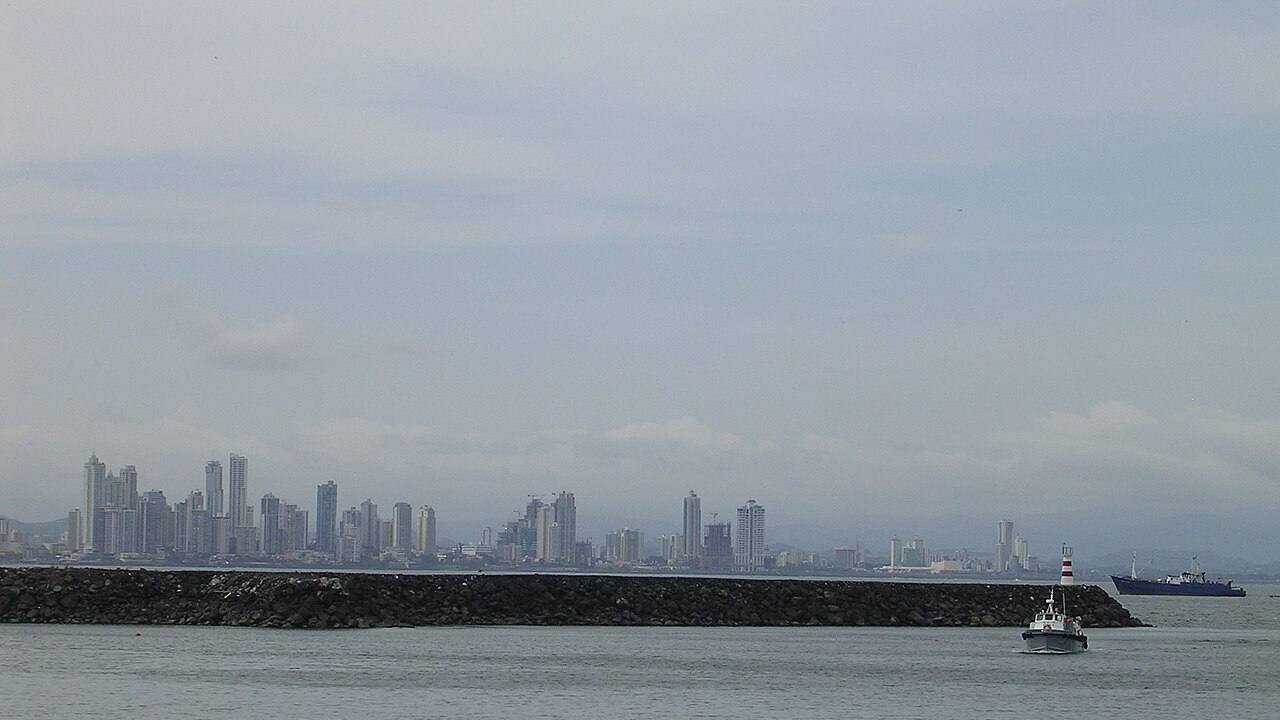
Photo: Panama City skyline by Dozenist, CC BY-SA 3.0, via Wikimedia Commons.
Frequently asked questions
What is the Panama Friendly Nations visa?
It is the residence subcategory created by Executive Decree 416 of 13 June 2012 for nationals of specific countries. Since Executive Decree 226 of 20 July 2021, the National Migration Service first grants a provisional permit of two years. Permanent residence is a later filing, and only if the original tie is still in place. Executive Decree 16 of 31 August 2026 added Ecuador and left the rest of that procedure in force.
Which countries qualify for the Friendly Nations visa in 2026?
Article 2, as restated on 31 August 2026, lists 51 countries, including the United States, Canada, the United Kingdom, and Ecuador. Italy is not on the list. The migration service publishes a separate Panama-Italy agreement, which this page does not describe. Nationality alone is not enough. You still need a job, property of at least B/.200,000, or a three-year deposit of B/.200,000.
What are the Panama Friendly Nations visa requirements?
The migration service sheet asks every applicant for a notarized power of attorney and application (including the parents' names and nationalities), three photographs, a notarized or authenticated passport copy, a criminal record certificate, a health certificate, certified checks of B/.250 to the National Treasury and B/.800 to the National Migration Service, and a sworn personal-background form. You then add the documents for employment, real estate, or the fixed-term deposit.
How much does the Panama Friendly Nations visa cost?
The government amounts printed on the migration service sheet are B/.250 payable to the National Treasury and B/.800 payable to the National Migration Service, both as certified checks, when you file for the provisional permit. The permanent-residence section of that sheet drops the criminal record certificate and the check. Lawyer, notary, translation, and bank or property costs are not on the sheet. There is no B/.5,000 route in the current documents.
How long does the Friendly Nations visa take?
The provisional permit lasts two years. That is the term of the permit, not a processing promise. Neither Decree 16 nor the migration service sheet states how many days or months the office takes to decide a file. Ask the lawyer who files the case what the queue is when you submit.
Does the Friendly Nations visa become permanent residence?
After the two-year provisional permit, you can apply for permanent residence on the same ground. The migration service sheet says the permanent filing repeats the earlier requirements except the criminal record certificate and the check. The visa decrees we read do not grant citizenship or state a waiting period for nationality.